
Head Office and Cluster Reports
Kowloon Central Cluster (KCC)
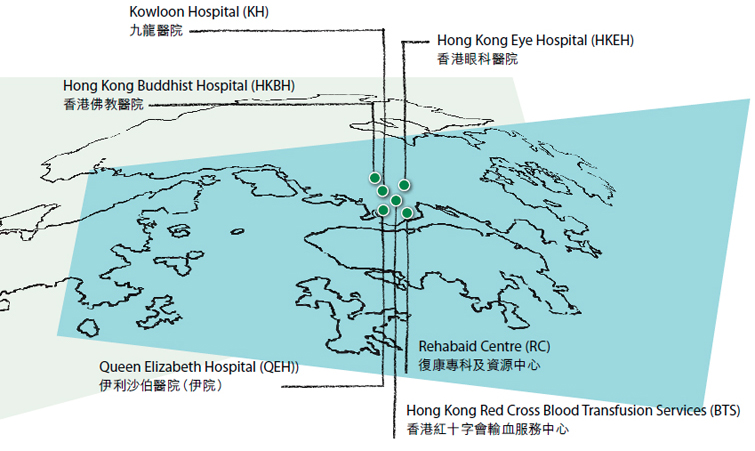
Number of general outpatient clinics6
Throughput
number of beds 3,547
Patient discharges* 202,846
A&E attendances206,214
Specialist outpatient attendances (clinical) 1,009,572
General outpatient attendances561,449
Full-time equivalent staff+ 8,898.46
* Total inpatient, day patient discharges and deaths
+ full-time equivalent
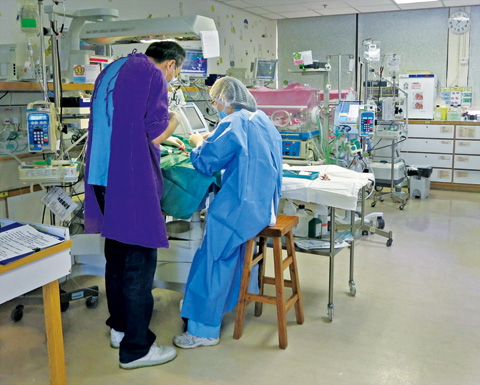 Kowloon Central Cluster : Photo 1
The Cluster has improved services in Kowloon Central districts while addressing staff shortage and high turnover. QEH introduced more safety devices to enhance occupational safety for frontline staff. To consolidate workflow and improve service, the WISER (We Innovate, Service Excel Regularly) movement engaged 30 lean facilitators in 2012. Regular teaching programmes with visits to external institutions were organised for experience sharing and enhancing lean management skills. Through WISER projects, staff morale and job satisfaction was ameliorated.
Measures were implemented by KCC to better manage growing service demand. Renal replacement therapies were provided for additional home haemodialysis and automated peritoneal dialysis patients. Two neonatal intensive beds had been opened since October 2012. Service hours of Central Endoscopy Unit were extended to cater to emergency needs. Nurse clinic was introduced in Saturday mornings to serve more diabetic patients. An adult transfusion centre was set up to provide thalassemia and hemophilia patients with integrated care. Transient ischaemic attack (TIA) clinic was established in October 2012 to offer early intervention to TIA patients.
Diagnostic services were improved with 5,000 additional CT scan quotas and a new Positron Emission Tomography - Computed Tomography (PET-CT) service delivery model. KH recruited additional case managers to serve patients with severe mental illness in Kowloon City district. QEH and KH organised additional hydrotherapy sessions to cater to non-government organisations for patients with musculoskeletal disorder. Pharmacy services of QEH Ambulatory Care Centre were strengthened while smoking cessation programme benefitted 420 patients.
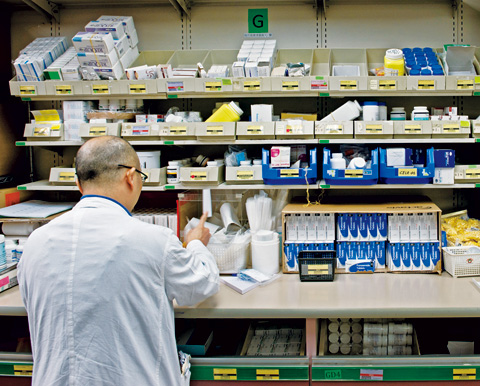 Kowloon Central Cluster : Photo 2
QEH is committed to enhancing quality and safety and has continued the evaluation and quality improvement programme cycle on hospital accreditation. Personal protective equipment in A&E Department and radiation monitoring equipment were upgraded for Daya Bay contingency plan. QEH and KH also increased the emergency stock level for winter surge. Facility improvement plan was formulated to upgrade aseptic dispensing services to enhance drug safety. Flash sterilisation was eliminated for implants and surgical instruments and so was the use of chemical disinfectants for reprocessing rigid endoscope. Stem cell service in BTS was improved through a territory-wide umbilical cord blood collection site established at United Christian Hospital in Kowloon East Cluster.
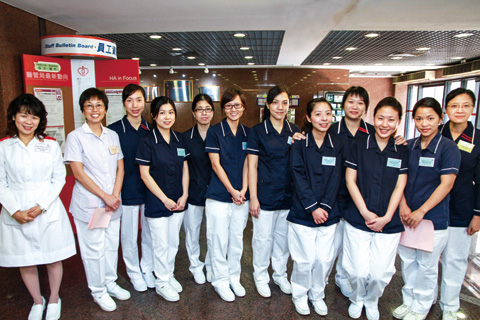 Kowloon Central Cluster : Photo 3
QEH further enhanced the central enquiry service at L Block Specialist Clinic from October 2012 to ensure partnership with patients and community. The KCC occupational lifestyle redesign centre for patients with chronic symptoms and functional limitations started operation in December 2012 in Yaumatei Specialist Clinic. Patient empowerment programme organised in collaboration with TWGHs Wong Cho Tong Community Centre benefitted over 2,000 chronic disease patients.
Modernisation facilitates delivery of quality patient care. The Cluster implemented the pharmacy supply chain management system on dangerous drug inventory in March 2013 while KH psychiatric admission ward was renovated to facilitate multi-disciplinary therapeutic care.
